
High-Quality Carbon Fiber Nonwoven Fabric Product Catalogue Manufacturer, Factories
Product Description
Using high-quality PAN-based (polyacrylonitrile-based) carbon fibers as the core raw material, the carbon content is as high as 99.9%-99.999%, featuring ultra-high tensile strength and lightweight characteristics. Under the same strength, the weight is only 1/4 of that of steel, significantly reducing the weight of the formed parts and suitable for scenarios with strict load requirements. After the fibers are arranged through special processes, the breaking strength can reach over 36N/15mm, with excellent structural stability and being unlikely to deform or break over a long period.
Possessing extreme environment tolerance, the stable service temperature range covers -60℃ to 2000℃, with the ability to withstand high temperatures in air up to 450-2000℃, non-flammability in fire scenarios, and no molten droplets, with outstanding flame retarcy (limiting oxygen index 55%-65%). At the same time, it has good tolerance to acids, alkalis, various oils, and solvents, with a service life far exceeding traditional materials in corrosive environments such as in the chemical and ship industries.
Possessing excellent electrical properties, with surface resistance of only 2-20Ω, capable of quickly conducting static electricity to avoid safety hazards or equipment failures caused by static accumulation. The heat conductivity exhibits significant anisotropy, with a plane heat conductivity of 300-1500W/(m・K) and a longitudinal heat conductivity of 20-60W/(m・K), enabling efficient heat conduction and uniform distribution, suitable for electronic cooling, heating, etc.
The raw materials are strictly selected, without harmful volatile substances. Some specifications can be naturally degraded, meeting green production requirements. At the same time, it has strong antibacterial properties, with a kill rate of common bacteria over 99.99%, and can release 500-10000an/cm³ of negative ions, having a far-infrared emission function (emission rate 80%-90%), suitable for medical and health fields.
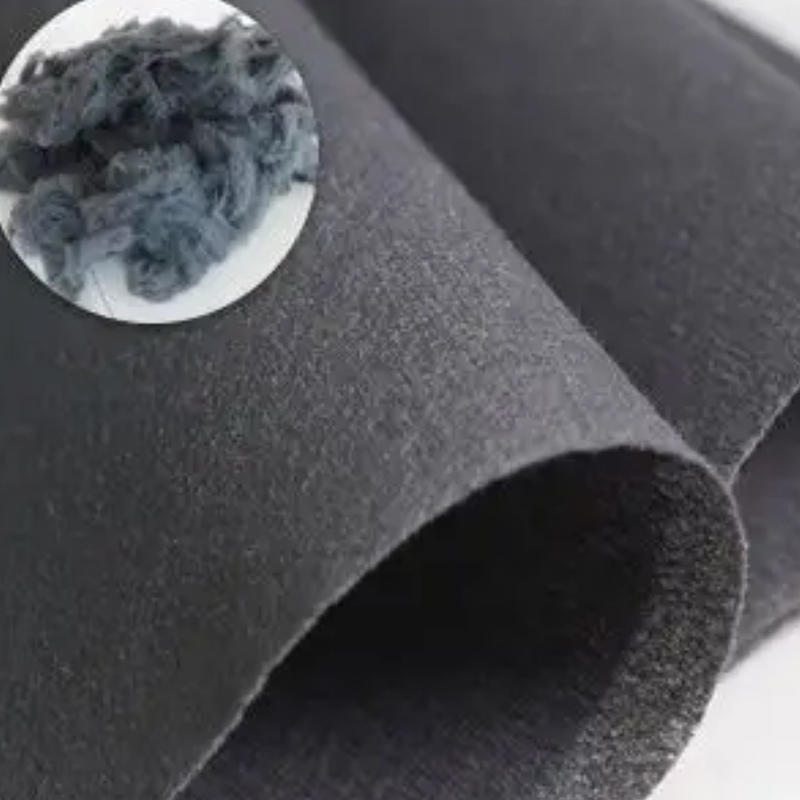
Mastering both dry spinning and wet spinning core processes. The wet process can produce ultra-thin mats as light as 4g/m², with fibers randomly and uniformly arranged to form multi-layer microporous structures, with resin penetration speed being fast, which can enhance interlayer fluidity and form a resin-rich protective layer; the dry process focuses on high-strength molding, allowing for adjustment of fiber orientation to balance mechanical properties and processing efficiency.
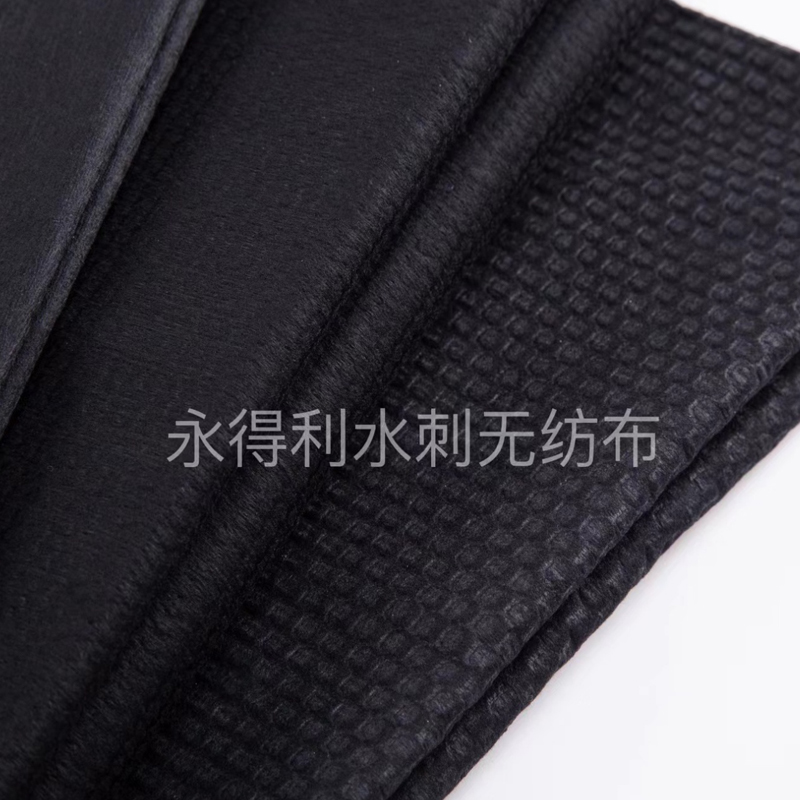
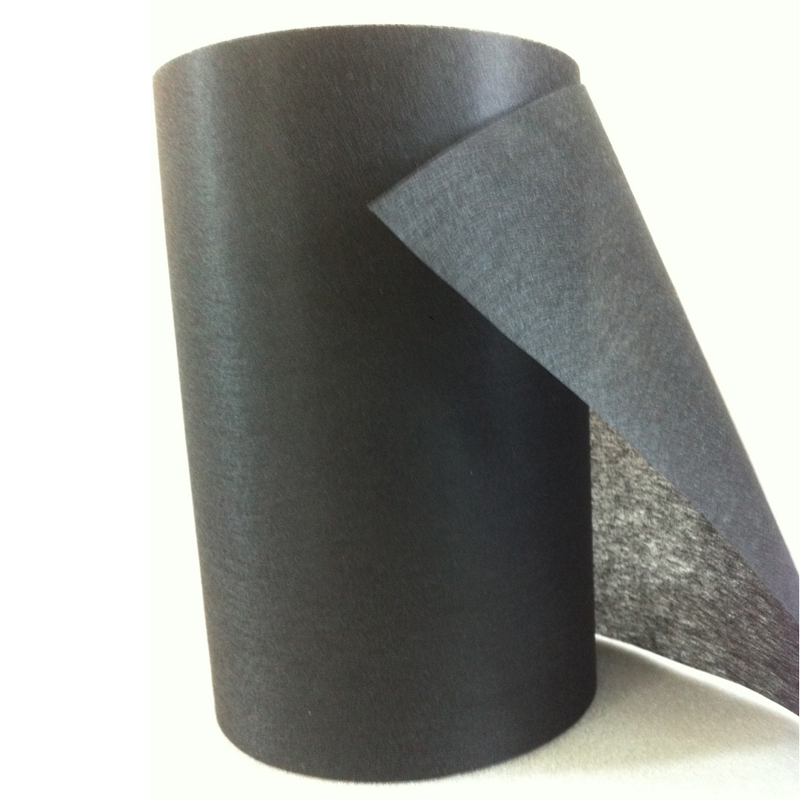
The product surface is flat, the fiber distribution is uniform, compatible with various resin systems such as epoxy resin and polyester resin, directly used for composite molding, reducing pre-treatment processes. The weight range covers 4-200g/m², thickness 0.02-0.8mm, supporting 1-3m width customization, low processing difficulty, material utilization rate over 98%, effectively reducing production losses for customers.
Automobile and Rail Transit: As an enhanced material for lightweight components in the vehicle body, used in composite structures such as chassis and door frames, reducing the vehicle weight to improve range or fuel efficiency; also used to manufacture high-temperature resistant seals and engine sound insulation cotton, leveraging the flame retarcy and heat insulation properties to ensure cabin safety and reduce noise interference.
Electronics and New Energy: In the battery field, its high conductivity and high porosity characteristics make it an ideal electrode or collector for flow batteries, capable of increasing electrochemical reaction efficiency by tenfold, enhancing battery power and energy density; in electronic equipment, used as a heat dissipation layer for circuit boards and static protection pads, quickly conducting heat and static electricity to ensure stable operation of the equipment.
Chemical Engineering and Shipbuilding: Manufacturing anti-static inner linings and corrosion-resistant protective layers for oil/gas pipelines and chemical storage tanks, utilizing conductive properties to prevent explosion risks caused by static sparks, and extending equipment lifespan through corrosion resistance; in the shipbuilding field, it can be used as lightweight materials for ship bodies and fireproof isolation layers, balancing weight reduction and safety protection requirements.
Aerospace Equipment: Structural reinforcement materials for spacecraft and passenger aircraft (such as A380, B747), including wing and fuselage composite components, which reduce takeoff load and improve fuel efficiency through lightweight characteristics; also as thermal insulation layers for satellites and spacecraft, protecting against extreme temperature differences and high-energy particle impacts in space.
Sports and High-End Equipment: Core reinforcement materials for sports equipment such as golf clubs, badminton rackets, and racing cars, enhancing the strength and toughness of the equipment while reducing weight to optimize control performance; in the fields of unmanned aircraft and high-end bicycles, it is used for the manufacturing of the body and components, balancing structural stability and endurance.
Medical Health: Used for antibacterial dressings and medical protective gear, utilizing a 99.99%+ antibacterial rate to inhibit bacterial growth and reduce infection risks; the far-infrared emission and negative ion release functions can be used in therapeutic protective gear to assist in improving local blood circulation and enhancing health care effects. Additionally, it can be used as an anti-static inner lining for medical equipment to ensure the stable operation of precision instruments.
Home and Protection: Used as soundproof wall fillers and audio soundproof materials in offices and hotels, absorbing sound waves through the porous structure of fibers, achieving significant noise reduction effects; manufacturing fire blankets and fire-resistant clothing as protective items, effectively blocking high temperatures in fire scenarios and providing time for escape. In the air purification field, it can be made into efficient filters, combining dust removal and antibacterial functions.
Building Reinforcement: Processed into single-directional reinforcing fabrics and carbon fiber bars, used for structural reinforcement of buildings and bridges, enhancing building bearing capacity through high-strength characteristics and extending service life; also suitable for the restoration of ancient buildings, reducing the load impact of reinforcement materials on the original structure.
New Energy Equipment: Used in wind turbine blades, carbon fiber wound gas cylinders, etc., for the manufacturing of new energy equipment, utilizing lightweight and high-strength characteristics to enhance wind turbine resistance to wind loads and extend the service life of gas cylinders; in the solar energy field, it can be used as an enhancement and heat dissipation material for photovoltaic components, improving equipment stability and energy conversion efficiency.
Using the wet-process forming method, short-cut carbon fibers are dispersed in water and then formed to form a random and uniform microporous network structure. The core advantages are fast resin penetration speed and good covering performance, effectively covering the transmittance effect of fiber-reinforced fabrics, with customizable weights down to 4g/m² ultra-thin specifications. Mainly suitable for surface modification of composite materials, battery electrodes, and fine filtration scenarios, with customer groups including electronic material factories, composite material manufacturers.
Through dry-process fiber combing and forming, focusing on mechanical properties and production efficiency, fiber orientation can be adjusted according to requirements. The product has high strength, fast forming speed, with a weight range of 40-200g/m² and a thickness of 0.025-2mm. Suitable for automotive interior reinforcement, building reinforcement, soundproof materials, etc., supplied to automotive component factories, building material suppliers, etc.
Focusing on aerospace, sports equipment, and new energy equipment fields, emphasizing high strength, lightweight, and customization, some products need to meet aviation-grade quality standards. Provide full-process technical support from raw material selection to finished product processing, mainly serving aerospace supporting enterprises, high-end sports equipment manufacturers, and new energy equipment manufacturers.
Designed for industrial scenarios such as automobiles, chemicals, and ships, it highlights the properties of high temperature resistance, corrosion resistance, and anti-static performance. The specifications are mainly in medium to high weight (50-200g/m²), and special functions such as flame retarcy and chemical corrosion resistance can be customized. Customers include automobile manufacturers, chemical equipment factories, and shipbuilding enterprises, etc.
Covers medical, home, and air purification fields, focusing on antibacteriality, safety, and comfort. It provides food-grade and medical-grade certified products, with a weight of 4-50g/m² for lightweight specifications. It is supplied to medical accessory factories, home product branders, and air purification equipment companies, etc.
Possesses basic high strength and lightweight characteristics, without special functional additions, suitable for scenarios such as building reinforcement and ordinary composite material reinforcement, with high cost performance and meeting regular strength requirements.
Optimizes fiber arrangement to enhance conductive performance, surface resistance ≤ 20Ω, used for electronic equipment protection, pipeline anti-static lining, etc., ensuring rapid discharge of static electricity.
Limiting oxygen index ≥ 55%, high-temperature tolerance ≥ 450℃, suitable for fireproof materials, high-temperature seals, engine insulation layers, etc., in high-temperature or fireproof scenarios.
Adds antibacterial components, antibacterial rate ≥ 99.9%, and has far-infrared emission function, used for medical dressings, health protective gear, etc., in the field of daily life and health.









