
+86 180 1816 5529 [email protected] Changshu, Jiangsu, China

High-Quality Aramid Nonwoven Fabrics Manufacturers, Companies

Aramid spunlace nonwoven fabrics leverage the inherent advantages of aramid fibers and the structural characteristics of spunlace technology to form three core features, precisely breaking through the performance bottlenecks of traditional nonwoven fabrics in high-temperature and high-risk scenarios. ​

Product Description

Changshu Yongdeli Spunlaced Nonwoven Fabrics Co., Ltd. has been deeply engaged in the production of high-performance nonwoven fabrics, using high-quality aromatic polyamide fibers (aramid fibers) as raw materials. It can adopt 1314 blending and integrate the high-pressure spunlace flexible entanglement process to create aramid spunlace nonwoven fabric products suitable for extreme environments and high-end scenarios. The following focuses on its core features and main application domains, showcasing the differentiated value of high-performance materials.

I. Core Features of Aramid Spunlace Nonwoven Fabrics: Performance Benchmark in Extreme Environments

Aramid spunlace nonwoven fabrics leverage the inherent advantages of aramid fibers and the structural characteristics of spunlace technology to form three core features, precisely breaking through the performance bottlenecks of traditional nonwoven fabrics in high-temperature and high-risk scenarios:

1. High Temperature Resistance + Flame Retardancy: "Safety Barrier" in Extreme High-Temperature Scenarios
Long-term temperature stability: Different from conventional fibers such as polypropylene (temperature resistance ≤ 120°C) and polyester (temperature resistance ≤ 150°C), aramid fibers can work stably at 200°C for a long time, with a short-term temperature resistance up to 250°C. After spunlace reinforcement, the original temperature resistance of the fibers is still maintained, and they can be used continuously for more than 6 months in high-temperature operation scenarios such as steel smelting and asphalt mixing, without aging or damage, which is 3-5 times that of traditional high-temperature resistant materials.
Essential Flame Retardancy without Hazards: No additional flame retardants are required. The oxygen index is ≥ 28% (far exceeding the 28% standard of flame retardant modified polypropylene), and it does not burn or melt when exposed to fire, only undergoing carbonization with a stable carbon layer structure, effectively preventing the spread of flames and solving the safety pain point of traditional flame-retardant nonwoven fabrics "flame melting and falling injury" in high-temperature scenarios.
2. High Strength + High Modulus: "Structural Framework" in Heavy-Duty Scenarios
Mechanical performance surpassing conventional materials: The density of aramid fibers is 1.416g/cm³, slightly higher than polypropylene, but the longitudinal and transverse breaking strength can reach 1000N/5×20cm, which is 50 times that of polypropylene; and the modulus is extremely high, with a deformation rate ≤ 2% after force application. After cross-lapped spunlace process reinforcement, the fibers are closely entangled, with excellent anti-tear performance, capable of withstanding heavy object impacts or high-frequency friction without damage.
No strength loss in wet state: Unlike cotton fibers whose strength decreases by 40% after absorbing moisture and viscose fibers that easily swell when exposed to water, aramid spunlace nonwoven fabrics maintain a 100% strength retention rate in humid environments, and have good acid and alkali corrosion resistance, far exceeding conventional nonwoven fabrics in durability in humid and corrosive scenarios.
3. Flexible Processing + Functional Compatibility: "Adaptation Foundation" for High-End Customization
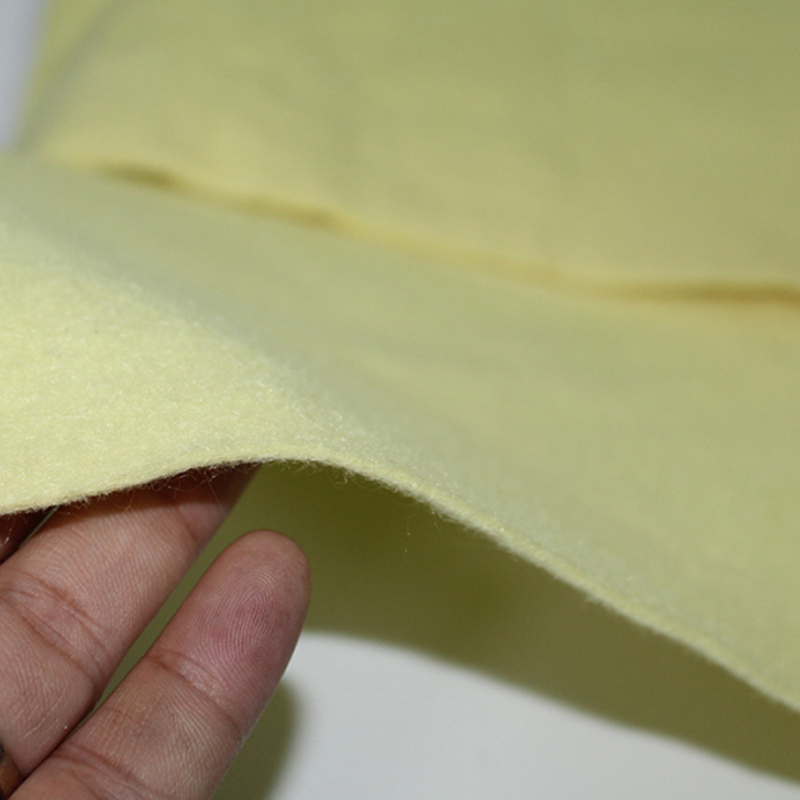
Spunlace process retains fiber advantages: Using high-pressure spunlace flexible entanglement reinforcement, there is no damage to the fiber structure by the needles, the product appearance is closer to traditional textiles, with soft texture and good drapability, and can be cut and sewn into any shape, solving the problem of "hard and brittle, poor processing" of aramid needle-punch felts.
Great functional compatibility potential: Through post-treatment processes such as fluorine coating and anti-static functions, it can be combined with fluorine treatment to make the surface non-stick to oil stains, suitable for high-temperature filtration scenarios; and when combined with spunlace fabric nets, it has both high strength and adsorption performance, meeting multi-dimensional high-end requirements.

II. Main Application Domains of Aramid Spunlace Nonwoven Fabrics: Essential Solutions for High-End Scenarios

Based on the above core features, aramid spunlace nonwoven fabrics have become an indispensable material in industrial high-temperature, safety protection, and high-end filtration fields, focusing on core links with high requirements, high risks, and high value:

1. Industrial Manufacturing Field: "Production Guardian" in Extreme Environments
High-temperature filtration scenario: Dust-filtering bags for power plant boilers, smoke exhaust filter cloths at asphalt mixing stations - Continuous filtration of dust at 200°C high-temperature environment, with a filtration accuracy of 1-5 μm. It can capture fine dust particles and is resistant to acid and alkali corrosion, with a service life of over 1 year, which is twice longer than traditional glass fiber filter cloths, significantly reducing equipment maintenance frequency and costs.
Mechanical protection scenario: Heat insulation linings for metallurgical equipment, high-temperature pads for automotive braking systems - No deformation even under 250°C short-term high-temperature conditions, effectively blocking the high temperature generated by equipment operation, protecting surrounding components from thermal damage; and with high-strength characteristics, it can withstand the high-frequency friction of the braking system, suitable for heavy-duty machinery such as automobiles and metallurgy.
Wear-resistant protection scenario: Wear-resistant fabric for mining transportation equipment, anti-scratch cover cloth for construction machinery - High tear resistance, capable of withstanding the impact and friction of minerals and sandstone, with a thickness loss rate of ≤ 5% after 100,000 repetitions of friction, which is 10 times that of ordinary polyester wear-resistant fabric, reducing equipment wear costs.
2. Safety Protection Domain: "Life Line" in High-Risk Scenarios
Personal protective equipment: Outer layer of firefighters' fire-fighting suits, welder's protective aprons - Flame-resistant and high-temperature-resistant by nature, can block flames and high-temperature radiation, protecting workers from burns; and with a soft texture, it does not affect limb movement, solving the problem of "heavy and restrictive" traditional protective equipment.
Emergency rescue supplies: Fire escape blankets for high-rise buildings, emergency protective cloths for oil tank areas - When exposed to fire, it forms a stable carbon layer, which can wrap the human body or cover the leakage substance, blocking flames and toxic gases. Its weight is only 60% of traditional fireproof canvas, combining portability and protection, suitable for the rapid response requirements of emergency rescue.
3. High-End Filtration and Special Fields: "Performance Core" in Precise Scenarios
Chemical high-end filtration: Strongly corrosive liquid filter cloths, high-temperature purification filter materials - Acid and alkali resistant and high-temperature resistant, capable of filtering chemical raw materials in a 180°C strong acid environment, without adsorbing the filter liquid components, ensuring product purity; and without shedding fibers, meeting the clean standards of the pharmaceutical industry, making it an indispensable high-end choice that cannot be replaced by traditional filter materials.
Special electronic materials: High-temperature electronic component insulation pads, lithium battery flame retardant separators - Maintains insulation performance stability at 200°C high temperature and is inherently flame-retardant, effectively preventing electronic component short circuits and fires; in lithium battery applications, it can prevent electrolyte corrosion and also play a role in flame retardancy and explosion prevention, suitable for high-end manufacturing demands of new energy.

About Yongdeli: Professional Manufacturer of Aramid Spunlace Non-Woven Fabrics

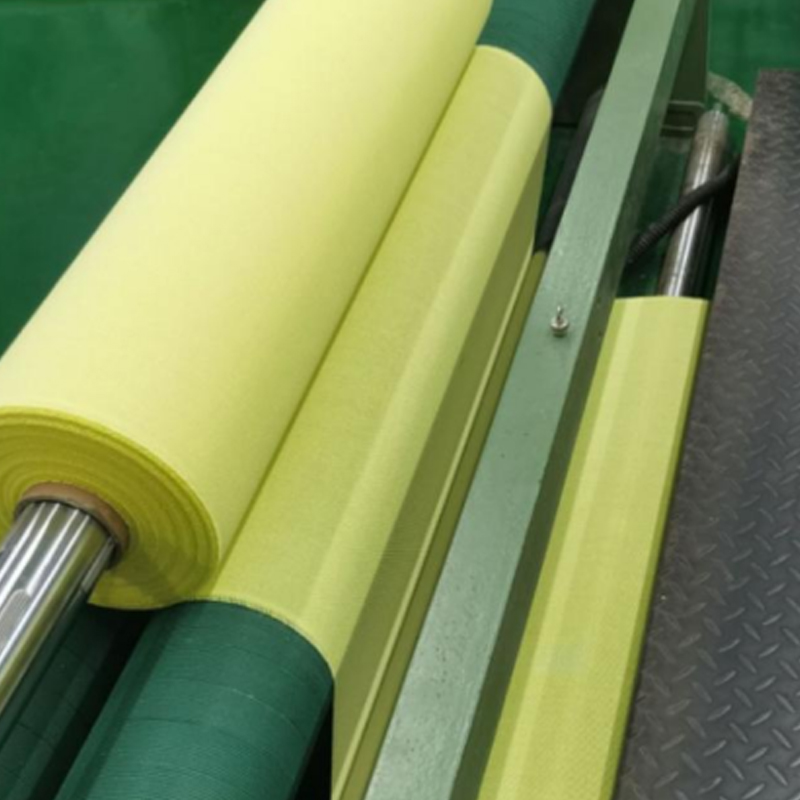
Changshu Yongdeli Spunlaced Non-woven Fabric Co., Ltd., relying on mature spunlace production technology, can provide custom-made aramid spunlace non-woven fabrics with a weight of 50-500 g/㎡ and a width of 0.2-3.2 m, supporting post-processing techniques such as brushing, polishing, and coating.

If you need to know about product samples or customization plans, please feel free to contact us.


Frequently Asked Questions (FAQ)

What temperature can aramid spunlace nonwoven fabrics endure?
Aramid spunlace nonwoven fabrics can operate continuously and stably at 200°C for prolonged periods, and handle short-term exposure up to 250°C without degradation or loss of structural integrity.
How does aramid nonwoven fabric react to open flames?
It features inherent flame retardancy with an oxygen index ≥ 28%. When exposed to direct fire, it does not melt or drip; instead, it rapidly forms a stable carbonized layer that blocks fire propagation.
Does moisture affect the strength of aramid spunlace nonwoven fabrics?
No, unlike fibers like cotton or viscose that degrade or swell, aramid spunlace fabrics retain 100% of their tensile strength in wet and humid environments, accompanied by strong chemical and corrosion resistance.
What makes spunlace aramid superior to needle-punched aramid felt?
High-pressure hydroentanglement preserves fiber structural integrity without needle punctures. This makes the resulting fabric significantly softer, more drapable, and far easier to cut and sew, avoiding the stiffness and brittleness common to needle-punched options.
What customization specifications does Changshu Yongdeli offer?
Changshu Yongdeli can manufacture aramid spunlace fabrics ranging in weight from 50 to 500 g/m² and widths between 0.2 and 3.2 m, alongside functional post-processing such as coating, polishing, and brushing.

Related Products







