
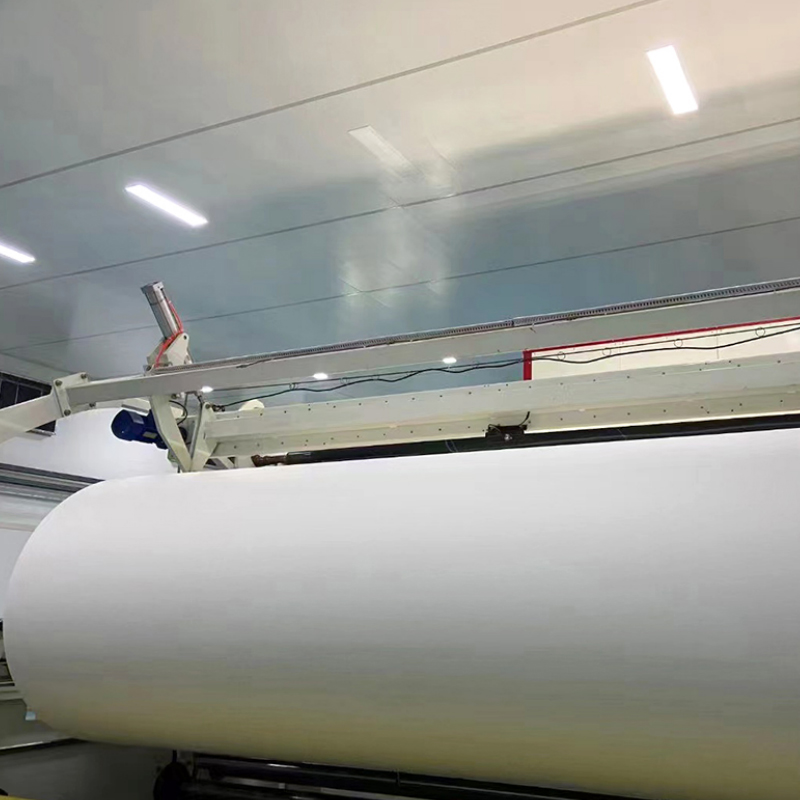
High-Quality Mosquito Repellent Nonwoven Fabric Products Factory, Products
Product Description
The protective effect and scene adaptability of mosquito repellent nonwoven fabric depend on the precise selection and scientific proportioning of nonwoven fabric raw materials. Our company selects various high-quality fibers such as polyester, viscose, cotton, and bamboo fiber, and combines the usage characteristics and requirements of different scenarios to create nonwoven fabric substrates with both basic performance and mosquito repellent adaptability, providing a stable carrier for the subsequent mosquito repellent finishing processes:
Gives the substrate excellent tensile strength, tear resistance, and water-wash resistance, ensuring that the substrate does not deform or break easily in outdoor use (such as mosquito repellent tents, outdoor clothing) or after frequent washing; it also has good weather resistance, can resist the influence of sunlight, rain, etc. on the mosquito repellent components, ensuring the long-term stability of the mosquito repellent effect, suitable for outdoor durable scenarios.
Comes with excellent moisture absorption and breathability, can quickly absorb and release mosquito repellent components, forming a uniform mosquito repellent protection layer, and its soft and skin-friendly touch makes the product more comfortable when in contact with the human body (such as mosquito repellent sleeves, baby mosquito repellent towels), avoiding hot and uncomfortable sensations, suitable for close-body protection scenarios.
Natural, environmentally friendly, and biocompatible, without irritation or odor, and has excellent moisture absorption and breathability, can gently carry mosquito repellent components, combined with mosquito repellent finishing processes, it becomes the preferred substrate for mosquito repellent products for maternal and infant groups, suitable for scenarios with strict requirements for safety and comfort.
Comes with natural antibacterial factors (bamboo quinone), can assist in inhibiting mosquito breeding environments, and has good breathability and environmental-friendly degradability, aligning with the green and healthy consumption trend, combined with mosquito repellent processes, it forms "mosquito repellent + antibacterial" dual protection, suitable for high-end home, children's mosquito repellent, etc., scenarios that pursue natural and functional integration.
We adjust the raw material ratio flexibly according to customer needs - for durable scenarios such as outdoor tents, sun protection clothes, the polyester ratio can be increased (such as 70% polyester + 30% viscose), while for scenarios such as baby mosquito repellent towels, close-body mosquito repellent clothing, cotton / bamboo fibers are selected as the main materials. Each batch of substrates undergoes multi-dimensional inspections (25-150g/㎡ adjustable, thickness, strength, breathability, etc.) with errors controlled within a very small range to ensure stable substrate performance, laying a solid foundation for the precise implementation of mosquito repellent finishing processes.
Our mosquito repellent nonwoven fabric strictly follows the step-by-step process mode of "preparing spunlace substrate first, then doing mosquito repellent finishing", customizing optimized finishing schemes based on the characteristics of different substrates and mosquito repellent requirements. Through refined control, it achieves "stable substrate + uniform mosquito repellent + long-lasting effect" triple guarantees, fundamentally blocking mosquito invasion:
Before mosquito repellent finishing, targeted pre-treatment is carried out on the spunlace substrate to create conditions for the uniform attachment and long-term retention of mosquito repellent components:
- Low-Temperature Drying (55-65℃): Applied to high moisture absorption materials such as viscose, cotton, and bamboo fibers to remove excess surface moisture, preventing penetration issues and mildew risks, ensuring an optimal base for uniform finishing.
- Plasma Surface Treatment: Utilized on synthetic fiber bases like polyester to activate surface groups, thereby reinforcing the chemical binding force and preventing the loss of repellent elements during water washing or friction.
Relying on customized mosquito repellent finishing production lines, according to customers' requirements for mosquito repellent range (such as repelling mosquitoes, midges), duration (short-term outdoor, long-term home use), and user groups (adults, mothers and infants), using environmentally friendly mosquito repellent components (such as DEET, Picaridin, natural plant essential oils) that meet national environmental protection standards, implementing differentiated processing techniques to ensure safe and efficient mosquito repellent effect:
Mosquito Repellent Component Selection: Strictly select mosquito repellent components that comply with the GB/T 30126-2013 "Testing and Evaluation of Mosquito Repellent Performance of Textiles" standards — for scenarios involving mothers and infants, sensitive skin groups, natural plant essential oil mosquito repellent components (such as lemon grass essential oil, peppermint essential oil, citronella essential oil derivatives) are selected, avoiding skin irritation; for long-term outdoor use scenarios, long-lasting and low-toxic chemical mosquito repellent components (such as 5%-10% DEET, Picaridin) are selected, with a mosquito repellent effect lasting up to 4-8 hours, all mosquito repellent components have passed third-party testing, without harmful residues or pungent odors.
Mosquito Repellent Component Application Process: Select an appropriate application method based on the characteristics of the base material fibers to ensure that the mosquito repellent components are evenly distributed on the surface and inside of the base material:
- Immersion - Rolling Dry: Engineered for highly absorbent viscose, cotton, and bamboo fibers. Substrates are fully submerged in solution (0.8%-3% concentration) and controlled by rolling gear (50%-70% wet pickup) to establish an internal-storage and external-release mechanism.
- Spraying - Drying: Engineered for polyester and synthetic fibers. Precise atomizing nozzles (3-8μm droplet size) apply 2-6g/㎡ controlled solution evenly along automated conveyors without accumulation.
Curing and Shaping Process: After the application of mosquito repellent components, a customized curing plan is customized for the mosquito repellent components:
- Low-Temperature Curing (60-70℃): Preserves natural essential oils and active botanical substances, bound gently for continuous 2-4 hour scent-shield release.
- Medium-Temperature Curing (80-100℃): Locks DEET or Picaridin tightly into the polymer network, securing ≥80% repellent efficacy even after 15 industrial washes, providing 4-8 hours of field protection and 1-2 months in domestic static usage.
The repellency rate against mosquitoes (such as Culex, Aedes, and Anopheles) is ≥ 90%. It can effectively prevent mosquito bites and reduce the risk of mosquito-borne diseases such as dengue fever and malaria. At the same time, the mosquito repellent components can be adjusted according to the scene requirements, precisely adapting to different needs such as repelling mosquitoes and midges. It takes effect quickly in outdoor scenarios and provides long-term protection in home scenarios.
It covers various substrates such as polyester, viscose, cotton, and bamboo fiber. The choice of materials can be flexibly selected based on the characteristics of the scenarios - polyester is chosen for outdoor durability, cotton or bamboo fiber for comfortable wear, viscose for moisture absorption and release, ensuring "one scenario, one material, one solution", meeting the product positioning and user needs of different customers.
The selected mosquito repellent components and raw materials comply with national environmental protection and safety standards (such as OEKO-TEX® Standard 100, GB 38414-2019 "Safety Technical Requirements for Infant Mosquito Repellent"), without harmful heavy metals or volatile organic compounds release. It has undergone skin irritation tests (no redness, itching, or allergic reactions), and can be safely used by mothers and infants, sensitive skin groups, etc., providing more peace of mind in use.
Beyond the mosquito repellent function, the breathability, skin-friendliness, and durability of the base materials are not affected - cotton and bamboo fiber bases are soft and skin-friendly, viscose bases are absorbent and breathable, polyester bases are strong and weather-resistant, ensuring that the product can not only perform the mosquito repellent function but also not sacrifice the comfort and service life during use, suitable for long-term use or frequent outdoor scenarios.
Using polyester + viscose substrates, combined with long-lasting chemical mosquito repellent components, it can be made into outdoor tent fabrics, sun protection clothing linings, mosquito repellent sleeves, camping pads, etc., effectively resisting outdoor mosquito attacks, with repellent duration of 4-8 hours, suitable for hiking, camping, fishing, etc., making travel more secure.
Using cotton / bamboo fiber substrates, combined with natural plant essential oil mosquito repellent components, it can be made into curtains, door curtains, window screen lining fabrics, baby bed mosquito net fabrics, etc., through slow release of mosquito repellent fragrance, forming a mosquito repellent barrier in the indoor environment, reducing mosquito breeding in the home, especially suitable for families with the elderly and children.
Using cotton substrates, combined with mild and non-irritating natural plant mosquito repellent components, it can be made into baby mosquito repellent towels, baby sleep bags linings, maternal and infant mosquito repellent bag fabrics, avoiding mosquito bites on the delicate skin of infants, while being non-irritating and odorless, safeguarding maternal and infant health.
Using viscose + cotton substrates, combined with fast-acting mosquito repellent components, it can be made into mosquito repellent base materials, portable mosquito repellent cloths, close-fitting mosquito repellent clothing (such as children's mosquito repellent pants), etc., lightweight and easy to carry, with immediate mosquito repellent effect, suitable for daily commuting, short-distance outdoor, etc., meeting the mosquito repellent needs at any time.
Since its establishment, Changshu Yongdeli Spunlaced Non-Woven Fabric Co., Ltd. has always regarded "sustainable quality" as the core of development, running through the entire production process of mosquito repellent spunlace non-woven fabric with professionalism and responsibility, protecting the health and safety of customers and users:
Raw Material End: We strictly select fiber suppliers and mosquito repellent component suppliers. Each batch of raw materials must provide quality inspection reports and safety certifications. The mosquito repellent components need to additionally provide third-party mosquito repellent performance test reports (including skin irritation and mosquito repellency duration tests). After our re-inspection (fiber composition, mosquito repellent component purity, safety), they can be used only if they are qualified to ensure the source safety.
Production End: We are equipped with a professional quality inspection team and precise testing equipment (such as mosquito repellent performance testers, skin irritation testers, and air permeability testers). We conduct real-time sampling inspections on key indicators such as substrate performance, uniformity of mosquito repellent components, and mosquito repellency rate. Each batch of products retains samples for future reference to prevent unqualified products from entering the market.
Service End: We provide customers with a full-process service from "demand communication - substrate selection - mosquito repellent solution design (such as customizing mosquito repellent component concentration, adjusting substrate ratio) - sample production - batch production - after-sales tracking". If customers have special requirements for mosquito repellent effect or suitability for the target user group, we can quickly optimize process parameters to ensure the product precisely fits the actual application scenario.
In the future, we will continue to be guided by "customer needs", deepen mosquito repellent technology research and development (such as developing more long-lasting natural mosquito repellent components, degradable mosquito repellent carriers), expand substrate categories and application scenarios, and strive to become a "reliable quality, flexible customization, professional service" supplier in the field of mosquito repellent spunlace nonwoven fabric. We will work with customers to achieve the long-term development goal of "sustainable cooperation, mutual benefit and win-win", and jointly safeguard users' mosquito-free healthy life.









