
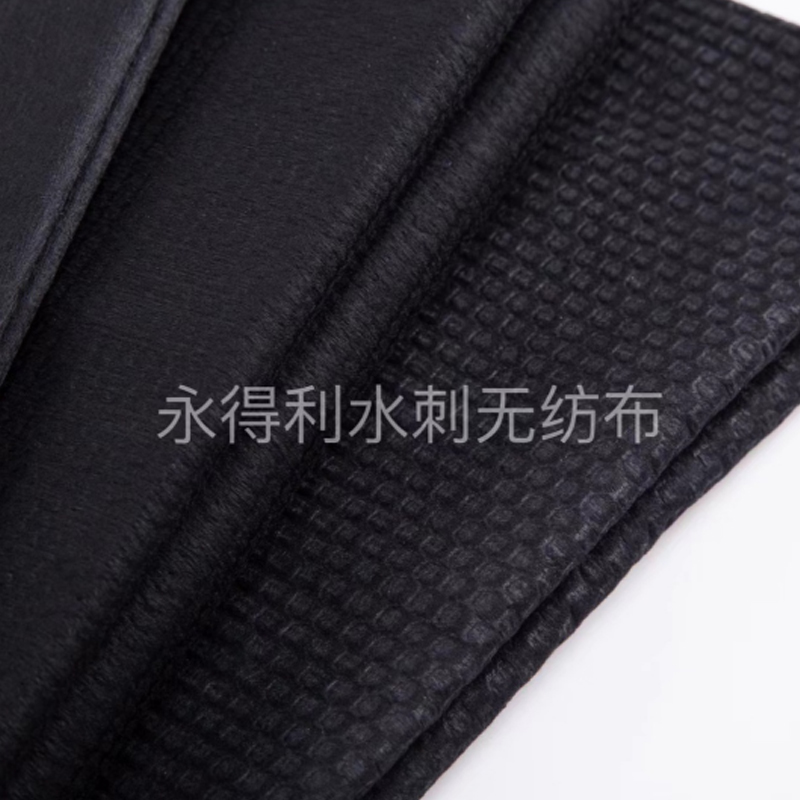
China Antibacterial and Deodorizing Spunlace Fabric Products Manufacturer, Product
Product Description
In terms of raw material selection, the company adheres to the concept of "quality originates from the foundation", choosing various high-quality substrates such as polyester, viscose, cotton, and bamboo fiber for the antibacterial and deodorizing spunlace fabric. Polyester gives the product excellent strength and corrosion resistance, suitable for complex usage environments such as pipes and filter cores; viscose enhances the adsorption performance, helping the antibacterial and deodorizing additives adhere efficiently; cotton has natural skin-friendly and breathable characteristics, suitable for scenarios where contact with air circulation is required; bamboo fiber itself has a natural antibacterial foundation, and with the synergistic effect of the antibacterial and deodorizing additives, it strengthens the core function of the product from the source, empowering subsequent processes with a high-quality foundation.
As a company-specific scenario-based product, the antibacterial and deodorizing spunlace fabric of the company has achieved a triple effect of antibacterial, deodorizing and fragrance through high-quality substrates and exclusive additive processes. Its core advantages are particularly prominent:
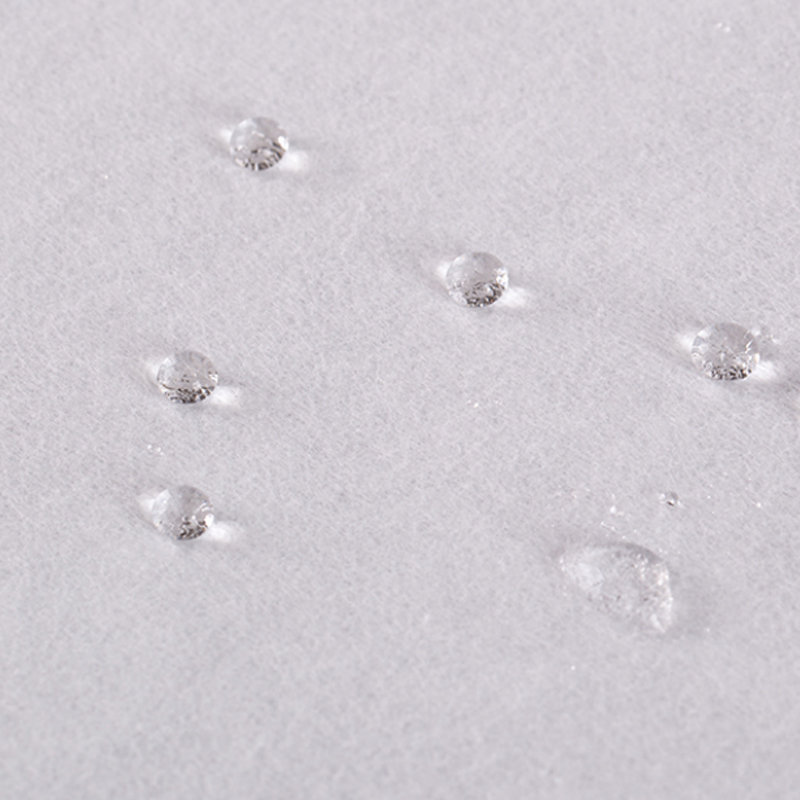
Using a dual antibacterial system of "substrate inherent advantages + enhancement", the bamboo fiber substrate has natural antibacterial components, combined with broad-spectrum antibacterial and deodorizing additives, it can effectively inhibit the growth of various pathogenic bacteria such as Escherichia coli, Staphylococcus aureus, and mold, with an antibacterial rate of over 99%. The additives are firmly combined with the fibers through a special fixation process, maintaining stable antibacterial effects even after long-term water flow or air circulation, solving the problem of short antibacterial duration of traditional materials.
The additives can precisely capture and decompose odor molecules such as ammonia and hydrogen sulfide in the sewer pipes, rather than simply masking the odor. The deodorization rate is over 90%; at the same time, the additives have natural plant fragrance factors, releasing a delicate aroma during the process, effectively improving the odor environment of pipes and filtration scenarios, achieving "deodorization + fragrance enhancement" dual effects, and enhancing the user experience.
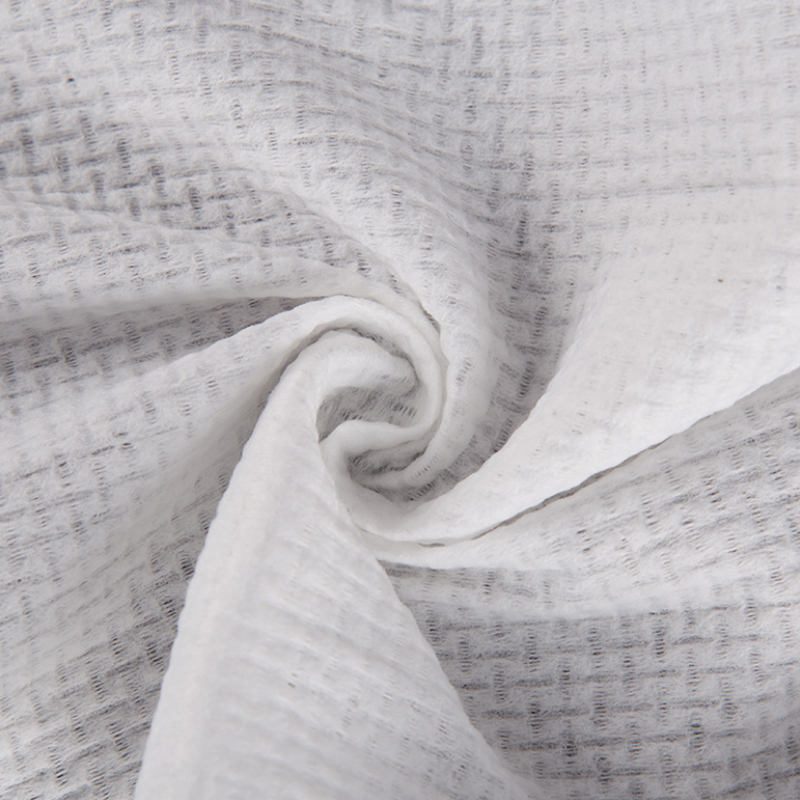
Different scenarios require flexible combinations of substrates - for sewer pipe scenarios, the "polyester + bamboo fiber" combination enhances corrosion resistance and strength; for filter net scenarios, the "viscose + cotton" combination improves adsorption and breathability. The spunlace process gives the product a tight fiber structure, with excellent breathability and mechanical strength, suitable for filtration requirements of water flow and air circulation.
Using food-grade environmentally friendly antibacterial and deodorizing additives, no harmful chemical substances are released, and it has been tested by authoritative institutions to meet safety standards, without causing secondary pollution when in contact with water and air. The combination of natural substrates such as cotton and bamboo fiber with environmentally friendly additives ensures environmental safety even in sealed pipes or indoor filtration scenarios.
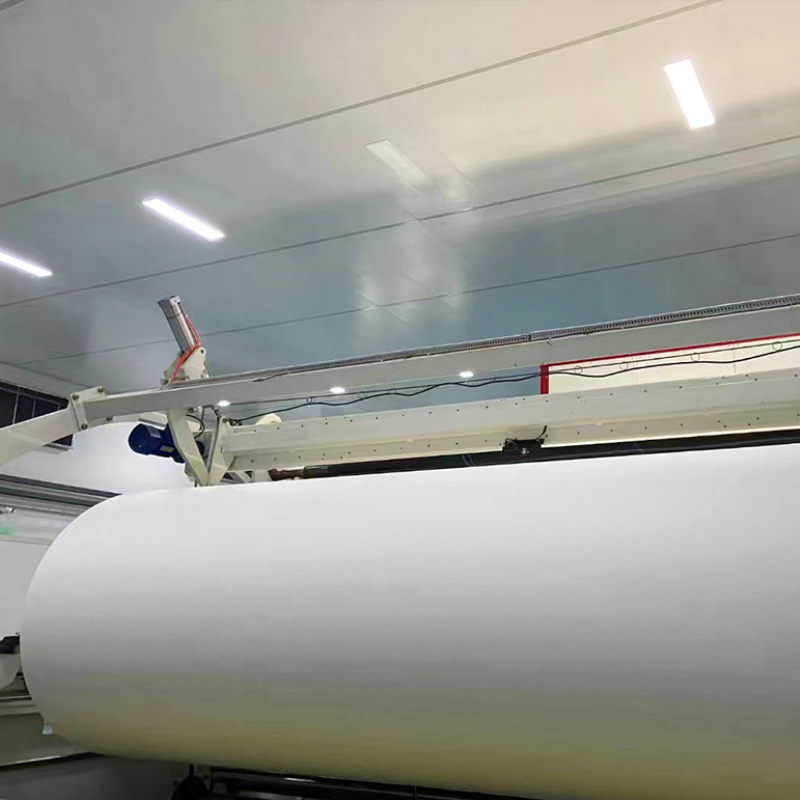
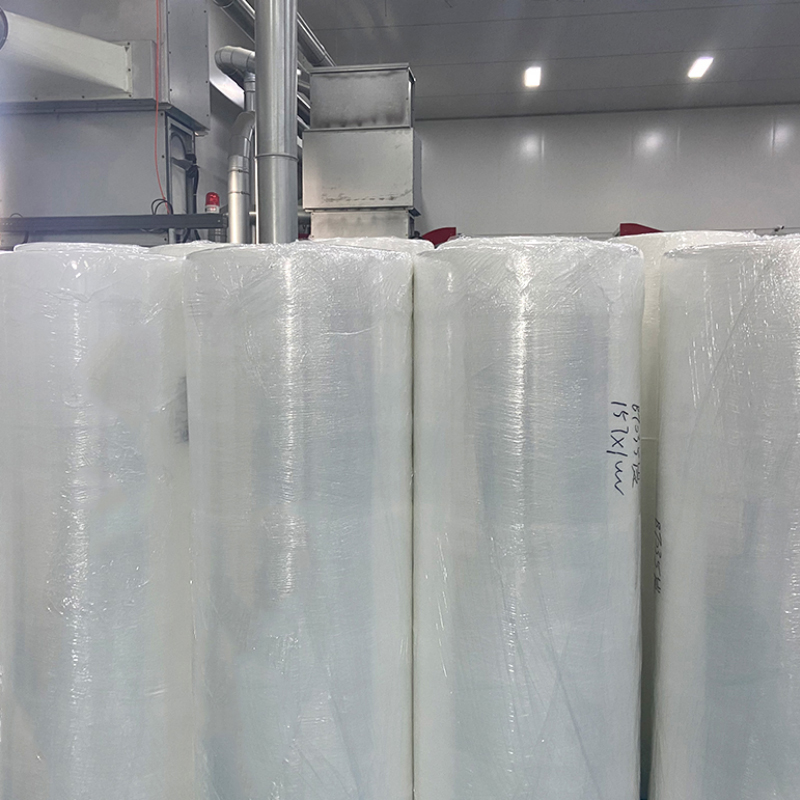
The outstanding quality of the antibacterial and deodorizing spunlace fabric is attributed to the company's "substrate customization production + precise additive empowerment + full-process quality control" refined production process system. The production process is based on spunlace base fabric adapted to specific scenarios, through an exclusive post-treatment process to achieve antibacterial and deodorizing functions. The entire process is efficient and environmentally friendly, with key steps as follows:
According to different scene requirements such as water pipes and filter screens, the ratios of various substrates like polyester, viscose, cotton, and bamboo fiber are selected. For example, in the water pipe scenario, the proportion of reinforced polyester is increased to enhance corrosion resistance, while in the filter scenario, the proportion of viscose is increased to enhance adsorption capacity. After sorting, loosening, mixing, combing, and cross-laying, the spunlace non-woven fabric base cloth is made through high-pressure spunlace reinforcement to ensure that the performance of the base cloth precisely matches the scene requirements.
Using environmentally friendly antibacterial and deodorizing additives, the concentration of additives and the proportion of aromatic factors are precisely adjusted according to the concentration of scene odors and antibacterial requirements. The formulation of additives is selected with strong compatibility with the fibers to ensure that they can not only achieve efficient antibacterial and deodorizing effects but also firmly adhere to the fiber surface, avoiding rapid loss during use.
Adopting an integrated post-treatment process of "immersion - rolling - drying", the spunlace base fabric is completely immersed in the antibacterial and deodorizing solution to ensure that the additives are evenly penetrated into the fiber interior. Through precise control of the attachment amount by the rolling equipment, waste and over-attachment are avoided. Then, it enters the constant-temperature drying room, dried and solidified at a specific temperature, forming a stable combination between the additives and the fibers. This step is the core to ensure the long-lasting antibacterial and deodorizing effect.
According to customer requirements, the finished products are cut, rolled, or made into specific-shaped filter core blanks; for filter screens and water pipes, additional brushing treatment can be carried out to enhance the adsorption area, or shaping treatment can be performed to ensure the product maintains structural stability during installation and use.
The substrates need to be tested for strength, air permeability, and pore size distribution; after the formulation of additives, the antibacterial rate and deodorization rate are tested; the finished products need to undergo antibacterial performance tests (such as the inhibition circle experiment), deodorization effect tests, environmental safety tests, and aroma persistence tests to ensure that each batch of products meets the usage standards for the scene.
With efficient and long-lasting antibacterial and deodorizing performance, scene-specific substrate adaptation, and environmental safety characteristics, the company's antibacterial and deodorizing spunlace non-woven fabric has been deeply applied in core areas such as water pipe purification and filter equipment, and has expanded to multiple related scenarios:
As core materials for pipe filter sheets and pipe deodorizing linings. Using a combination of polyester and bamboo fiber substrates, after antibacterial and deodorizing additive treatment, they are installed at the interface of kitchen and bathroom water pipes to effectively intercept debris while inhibiting the growth of mold and bacteria in the pipes, decomposing food residues, hair, etc., generating a pleasant aroma to improve indoor air quality and solve the problem of pipe odors.
Producing antibacterial and deodorizing filter screens for humidifiers. Selecting "viscose + cotton" hydrophilic substrates, the additives are evenly attached to the fiber surface. When water flows through, it can filter impurities while inhibiting the growth of bacteria in water scale through antibacterial components, and the deodorizing additives decompose the odors in the water, making the sprayed mist have a natural aroma, improving indoor air quality, and meeting the production needs of household and commercial humidifiers.
Used in air purifiers' front filter cores, water purifiers' front filter cores, and vehicle air conditioning filter cores. Using "polyester + viscose" composite substrates, it has both air permeability and adsorption properties. The antibacterial and deodorizing additives can filter bacteria, mold, and odor molecules in the air, such as cigarette smoke, pet odors, etc., reducing the burden of subsequent filtration stages while giving the purified air a faint aroma, suitable for filter core production of household and commercial appliances.
Producing bathroom floor drain filter pads and sink filter cores. The "polyester + bamboo fiber" combination that is resistant to water and corrosion is selected and installed at the drain or drainage outlet of the sink or toilet. It can not only filter hair and debris, but also has antibacterial and deodorizing properties, preventing the backflow of sewer odors and maintaining a fresh bathroom environment. It is suitable for the home building materials industry.
Used for filtering smoke and exhaust in restaurant kitchens and ventilation pipes in commercial bathrooms. It uses a high-strength polyester base material, and the antibacterial and deodorizing additives can withstand complex environments such as water vapor, effectively inhibiting the growth of bacteria in the pipes and the generation of unpleasant odors, improving the air environment in commercial places, and being suitable for scenarios such as restaurants and commercial properties.
Changshu Yongdeli spunlaced non-woven fabric Co., Ltd. always adheres to the concept of "quality first, customer first", through precise selection of high-quality base materials, scientific formulation of antibacterial and deodorizing additives, and in-depth research and development of exclusive post-treatment processes, it has created antibacterial and deodorizing spunlace non-woven fabrics suitable for multiple scenarios. The products have efficient and long-lasting core performance, playing a key role in pipe purification and filtration. In the future, the company will continuously optimize the additive formula and process parameters, develop customized products for more purification scenarios, and provide customers with more competitive antibacterial and deodorizing solutions. The company has meticulously crafted anti-static spunlace non-woven fabric, based on diverse high-quality raw materials, integrating advanced production technology, and combining functionality and practicality, providing efficient solutions for multiple scenarios.
In the selection of raw materials, the company adheres to the concept of "quality originates from the foundation", and selects various high-quality base materials such as polyester, viscose, cotton, and bamboo fiber for anti-static spunlace non-woven fabric. Polyester gives the product excellent strength and durability, ensuring that it does not break easily during use; viscose enhances the moisture absorption and breathability of the fabric, providing a comfortable touch experience; cotton material, with its natural and environmentally friendly characteristics, is suitable for scenarios with extremely high requirements for material safety; the natural antibacterial and breathable advantages of bamboo fiber upgrade the product's functionality. The flexible combination of multiple base materials can be customized according to the needs of different application scenarios, ensuring product quality and adaptability from the source.
As the core advantage product of the company, anti-static spunlace non-woven fabric has achieved multi-dimensional breakthroughs in characteristics, with particularly prominent core advantages:
The product is treated with professional anti-static technology, which can effectively reduce static accumulation and maintain stable anti-static effect in dry, friction-prone environments. After authoritative testing, its anti-static indicators remain at the industry-leading level for a long time, effectively avoiding problems such as dust adsorption, electronic component damage, and clothing entanglement caused by static electricity, providing a solid guarantee for production and use safety.
Relying on the unique advantages of the spunlace process, the internal fibers of the product are closely combined, with excellent tensile strength and tear strength, which are higher than traditional non-woven fabrics, and can withstand external forces such as stretching and friction, extending the service life. At the same time, the fabric texture is uniform, the hand feel is soft and delicate, and it has good drape and elasticity, suitable for various processing scenarios.
Using all-cotton, bamboo fiber, etc., natural base materials, combined with environmentally friendly anti-static additives, the product has no odor and no residual harmful chemical substances, and has passed multiple safety certification. Its excellent moisture absorption and breathability properties can quickly absorb moisture and keep the fabric dry, and when in contact with the skin, there is no irritation, even after long-term use, it can ensure a comfortable experience.
The company can flexibly adjust the raw material ratio, weight, width, and anti-static grade according to customer needs, from lightweight to heavy-duty, from ordinary anti-static to high-grade anti-static, it can be precisely customized to meet the individualized needs of different industries.
The outstanding quality of the anti-static spunlace non-woven fabric stems from the company's precise control and continuous innovation in the production process. The entire production process follows the principles of "fine management and full-process quality control". The key steps are as follows:
According to the product formula, the raw materials such as polyester, viscose, cotton, and bamboo fiber are sorted, loosened, and mixed. Precise measurement ensures the uniformity of fiber ratios. At the same time, the fibers are combed and impurities and short fibers are removed to ensure the smoothness of subsequent production.
Using advanced combing machines and cross-laying technology, the pre-treated fibers are combed into a uniform single-fiber layer, and then the fibers are evenly distributed in the longitudinal and transverse directions through cross-laying, forming a stable and uniformly thick fiber mesh, laying the foundation for the mechanical properties of the product.
This is the core stage of spunlace non-woven fabric production. The company uses multiple sets of high-pressure water injection heads to impact the fiber mesh with high-pressure water at high speed, causing the fibers to intertwine and bond with each other, forming a dense three-dimensional network structure. Through precise control of water pressure, water injection distance, and nozzle arrangement, the product strength is uniform and the feel is fine, while avoiding excessive fiber damage.
Using the advanced process of "post-treatment impregnation + low-temperature baking", environmentally friendly anti-static additives are evenly impregnated into the fabric, and then through low-temperature baking, the anti-static components are firmly combined with the fibers. This process not only ensures the stability and durability of the anti-static performance but also maximally retains the natural characteristics of the fabric, avoiding residue issues of additives.
After post-treatment processes such as washing, drying, and rolling, the product's flatness, softness, and stability are further improved. Subsequently, the product will undergo multiple quality inspection stages, including anti-static performance testing, strength testing, weight per unit area testing, and safety index testing, to ensure that each batch of products meets industry standards and customer requirements.
With stable anti-static performance and excellent comprehensive quality, the company's anti-static spunlace non-woven fabric has been widely used in various industries, becoming an indispensable functional material in each field:
As a key auxiliary material in electronic component production and assembly, it can be used to make anti-static wiping cloths, component packaging fabrics, and workshop dust-proof clothing. Its stable anti-static performance can effectively prevent static electricity from damaging electronic chips and circuit boards, while the excellent cleaning ability can remove dust and stains on the surface of components.
Used for making clothing linings, anti-static work clothes, gloves, hats, etc. The fabric is soft and comfortable, and can effectively prevent clothing from generating static electricity due to friction, causing dust adsorption and skin entanglement problems. It is suitable for electronic workshops, chemical workshops, and other anti-static working scenarios.
Can be made into medical wiping cloths, surgical inner linings, mask inner layers, etc. The product is natural, environmentally friendly, and non-irritating. The anti-static performance can avoid static electricity adsorbing bacteria or dust, ensuring the cleanliness and safety of the medical environment. At the same time, the good breathability improves the comfort of healthcare workers.
As a packaging material for precision instruments, optical equipment, cosmetics, military, etc., it can effectively prevent static electricity from damaging products, while the soft texture avoids scratches on the product surface during packaging and has protective and buffering functions. For customers with higher anti-static index requirements, anti-static PE film can be adhered to the anti-static spunlace non-woven fabric for dual protection.
Used for making anti-static dust removal cloths, home textile linings, etc. The dust removal cloth can efficiently absorb dust. Anti-static non-woven fabric, with its advantages of moisture absorption, breathability and softness, is suitable for daily cleaning and hygiene scenarios.
Changshu Yongdeli Spunlaced Nonwoven Fabric Co., Ltd. has always adhered to the principle of "quality first, customer supreme". Through comprehensive control of raw materials, processes and quality, the anti-static spunlace nonwoven fabric can play a core role in various industries. In the future, the company will continue to deepen its research and development efforts, continuously optimize product performance, and provide more customers with higher-quality spunlace nonwoven fabric solutions.









