
+86 180 1816 5529 [email protected] Changshu, Jiangsu, China

Why Is China Spunlace Cloth a Top Choice for Buyers?

Time:2026-10-15 Author:Isabella
0%

Why Is China Spunlace Cloth a Top Choice for Buyers?

China Spunlace Cloth has become a practical option for buyers seeking softness, strength, and production flexibility. Its fibers are entangled with high-pressure water, without traditional chemical binders. The result feels textile-like, yet performs reliably in wipes, medical fabrics, hygiene products, and industrial cleaning materials.

Dr. Subhash K. Batra, a respected nonwovens researcher, once emphasized, “Performance must be judged in use, not only on the specification sheet.” That principle matters here. A cloth may look smooth under showroom lighting, but its real value appears during wiping, folding, saturation, and repeated handling. Buyers should examine basis weight, fiber composition, absorbency, tensile strength, lint levels, and roll consistency. Small differences can affect converting speed and customer satisfaction.

The supply advantage is also practical. Chinese manufacturers often offer broad material choices, scalable production, customized widths, and competitive export experience. Many suppliers can provide test reports, quality records, and traceability documents. Still, lower pricing should not become the only decision. It can hide uneven bonding, excessive lint, or unstable moisture performance.

Not every mill is equal.

A careful buyer should request samples from multiple production lots. Compare them under realistic conditions, not just by touch. Ask how quality is controlled before shipment. Confirm that product claims match applicable market requirements and buyer specifications. China Spunlace Cloth is not automatically perfect, and that assumption deserves reflection. Its strongest advantage appears when material science, factory discipline, and transparent communication work together.
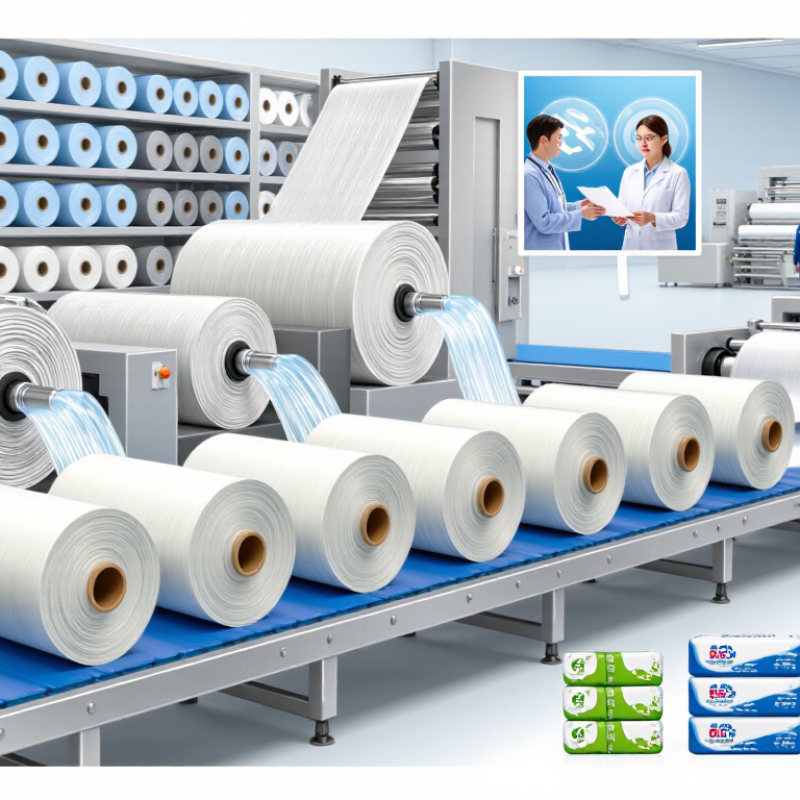
Why Is China Spunlace Cloth a Top Choice for Buyers?

What Is China Spunlace Cloth? Nonwoven Structure and 20–200 GSM Range

China spunlace cloth is a hydroentangled nonwoven material. It is made by directing high-pressure water jets through a loose fiber web. The jets entangle fibers without conventional weaving or knitting. Common fibers include viscose, polyester, cotton, and blended inputs. The surface feels soft, while the structure remains breathable and flexible.

Its 20–200 GSM range supports different purchasing needs. Light 20–50 GSM fabric suits facial wipes, dry wipes, and delicate liners. Medium 50–100 GSM grades offer better strength for cleaning cloths and personal-care applications. Heavy 100–200 GSM material feels denser and handles repeated handling more confidently. GSM means grams per square meter. It is not a complete quality score. Fiber type, jet pressure, bonding uniformity, and moisture resistance also matter.

Grand View Research estimated the global nonwoven fabrics market at about USD 53.7 billion in 2023. Smithers also reports continuing demand growth for hygiene, filtration, and medical nonwovens through 2029. These figures explain buyer interest, but they do not replace testing. A 60 GSM cloth may outperform a 90 GSM cloth when fibers are better distributed. I have seen specifications look impressive on paper, yet edges shed during cutting. Buyers should request basis-weight checks, tensile results, absorbency data, and roll samples before approval. Small differences in hand feel can signal larger production inconsistencies.

How Is It Made? Hydroentanglement Using 60–150 Bar Water Jets

Why Is China Spunlace Cloth a Top Choice for Buyers?

How Is It Made?

Hydroentanglement Using 60–150 Bar Water Jets

China spunlace cloth is produced by bonding fibers with water, not conventional glue. The process usually begins with viscose, polyester, cotton, or blended fibers. These fibers are opened, mixed, and formed into a loose web. Its weight and fiber ratio affect softness, strength, absorbency, and final use.

The web then passes beneath fine water jets operating between 60 and 150 bar. The jets strike the fibers repeatedly and entangle them mechanically. Lower pressure can protect delicate fibers. Higher pressure can improve bonding and tensile strength. Several jet stages may be used, with pressure adjusted across the production line. The wet sheet is then dewatered, dried, and wound into rolls.

From practical quality checks, uniform fiber distribution matters as much as water pressure. Uneven webs may create weak areas, rough surfaces, or inconsistent absorbency. Filtration is also important because blocked nozzles can disturb the jet pattern. Small defects happen. They should not be ignored. Buyers often review basis weight, thickness, tensile strength, lint level, moisture, and roll appearance before approval. Some production lines perform well, yet settings still need regular adjustment for different fiber blends and fabric weights. That detail is easy to underestimate.

Which Performance Metrics Matter? ISO 9073 Tests for Strength and Absorption

China spunlace cloth attracts buyers because it combines softness, drape, and practical manufacturing efficiency. Grand View Research estimated the global nonwoven fabric market at about US$53.5 billion in 2023. Healthcare and hygiene remained important application areas. That growth increases buyer pressure. Price alone cannot prove value.

ISO 9073 testing gives procurement teams clearer evidence. ISO 9073-3 measures tensile strength and elongation in both machine and cross directions. Request dry and wet results. A cloth may feel strong when dry but weaken after contact with water. That difference matters during wiping, cleaning, or liquid handling. Check the test load, specimen width, conditioning time, and variation between samples. The average number is not enough.

ISO 9073-6 evaluates liquid absorption time and absorption capacity. A useful report should show how quickly a 10-by-10-centimeter sample takes up liquid, plus the retained liquid mass. Faster absorption is not always better. Very rapid uptake can cause uneven spreading or early saturation. Think about the actual task. A clinical wipe needs controlled pickup, while a cleaning cloth may need higher capacity. Smithers’ 2024 nonwovens outlook also highlights hygiene and medical uses as major demand drivers, making repeatable testing increasingly important. One overlooked issue is lint. ISO strength results cannot reveal it. Buyers should add a lint, odor, and surface-uniformity inspection before approval. The “best” cloth still depends on real handling.

Why Is China Spunlace Cloth a Top Choice for Buyers?

Representative performance ranges for commonly specified spunlace nonwoven fabrics. Strength is evaluated with ISO 9073-3, while liquid absorption behavior is commonly evaluated with ISO 9073-6. Actual results vary by fiber blend, basis weight, bonding pattern and finish.

Higher tensile strength, elongation and absorption capacity generally support better converting, handling and end-use performance. Lower strike-through time indicates faster liquid uptake.

Where Is It Used? Wipes, Medical Textiles, and Hygiene Products

China spunlace cloth is widely chosen for wipes because it feels soft, absorbs liquids quickly, and remains comfortable on skin. Its hydroentangled fiber structure creates strength without making the sheet feel harsh. In production, buyers often compare basis weight, absorbency, lint levels, and wet tensile strength. Small differences matter. A facial wipe needs a gentle surface, while an industrial wipe needs better durability.

Medical textiles require tighter control. Spunlace cloth can support disposable gowns, drapes, underpads, and wound-care components. Its breathable structure helps reduce discomfort during extended use. However, softness alone is not enough. Suppliers should provide clear information about fiber composition, cleanliness, manufacturing consistency, and sterilization compatibility. A material may perform well in a sample room but behave differently after packaging or storage.

Hygiene products use spunlace for baby wipes, personal-care wipes, and household cleaning sheets. The cloth can carry lotions or cleaning solutions evenly when its pore structure is properly designed. I have seen low-cost material create excessive lint or tear during dispensing. That weakens user confidence. Not every “premium” sheet performs better, either. Some feel thick but absorb slowly. Careful testing remains necessary, including wet handling, odor checks, skin-contact assessment, and roll-to-roll consistency. Real performance often appears after repeated use, not during a quick inspection.

How Should Buyers Compare Suppliers? MOQ, Certifications, and QC Data

Why Is China Spunlace Cloth a Top Choice for Buyers?

China spunlace cloth attracts buyers through flexible production, broad material options, and competitive manufacturing capacity. Yet price alone gives an incomplete picture. In sourcing work, I have found that stable quality matters more than a low quotation. Buyers should compare fiber blends, fabric weight, width tolerance, softness, absorbency, and packaging protection. Ask for a production sample, not only a catalogue swatch.

MOQ deserves careful attention. A smaller MOQ can support market testing, but it may increase unit costs or limit customization. Confirm whether the MOQ applies to each color, roll, or fabric specification. Certifications also need verification. Request the certificate number, issuing body, validity period, and covered factory location. ISO 9001 may support quality management, while application-specific certificates require closer review. Do not treat one certificate as proof of every performance claim.

Tips: Ask suppliers for recent batch QC data. Useful records may include GSM, tensile strength, absorbency time, lint level, moisture, and roll length. Check testing methods and acceptance limits. Compare at least three batches when possible. A polished report can still hide variation. I once overlooked roll-edge consistency, and the cutting process later suffered. Include inspection points before shipment, with clear sample quantities and defect definitions. Keep one approved reference sample for future comparison.

Why Is China Spunlace Cloth a Top Choice for Buyers? - How Should Buyers Compare Suppliers? MOQ, Certifications, and QC Data

Comparison Dimension Practical Buying Benchmark Typical RFQ Information to Request Acceptable Evidence Buyer Evaluation Note
Product Type Hydroentangled nonwoven made from viscose, polyester, wood pulp, cotton, or blended fibers. Fiber composition by percentage, web-forming process, bonding method, and intended end use. Technical data sheet, raw-material declaration, and production-process description. Confirm that the fiber blend matches absorbency, strength, softness, and disposal requirements.
Basis Weight Common commercial grades are approximately 30–100 g/m²; heavier grades are available for industrial applications. Target GSM, tolerance, test method, and sampling frequency. Batch test report using ISO 9073-1 or an equivalent recognized method. Compare both average GSM and permitted variation; GSM alone does not prove performance.
Roll Width and Length Widths are commonly customized for converting lines; many industrial RFQs specify approximately 100–3,200 mm. Finished width, roll length, core diameter, winding direction, splice limits, and roll weight. Approved drawing, packing specification, and roll inspection record. Check whether the roll format reduces slitting waste and line changeover time.
Tensile Strength A broad range is used commercially; the required value depends on GSM, fiber blend, direction, and end use. Machine-direction and cross-machine-direction strength, elongation, strip width, and test speed. Laboratory report based on ISO 9073-3 or an equivalent method. Never compare tensile values without confirming test direction and test method.
Absorbency Absorbency varies significantly by fiber blend, aperturing, finish, and basis weight; cellulose-rich grades generally provide higher liquid uptake. Absorption capacity, sinking time, liquid retention, and test liquid used. Test report with sample conditioning and method clearly stated. Use the same liquid and procedure when comparing samples from different suppliers.
Surface and Appearance Uniform web, low visible contamination, consistent color, limited holes, and controlled edge quality. Color tolerance, lint level, visible defect limits, hole size, edge condition, and inspection lighting. Golden sample, defect classification sheet, and incoming or final inspection records. A signed reference sample is more useful than a general statement such as “premium quality.”
pH and Chemical Residues For many skin-contact textile applications, buyers commonly specify a mildly acidic to neutral pH, often around 5.0–8.5, subject to product requirements. pH, extractable substances, fluorescent whitening agents, formaldehyde, azo dyes, and restricted substances. Independent laboratory report and restricted-substance declaration. The buyer should define the applicable regulation and product-contact category before testing.
Microbiological Control Limits depend on whether the material is used for general wiping, cosmetics, medical devices, or other regulated products. Total aerobic microbial count, yeast and mold, specified pathogens, sampling plan, and sterilization status. Current microbiological test report from a competent laboratory. Do not apply medical or cosmetic limits to a product without confirming the intended regulatory classification.
MOQ Indicative RFQ ranges are often about 500–2,000 kg for standard items and higher for custom colors, widths, or special finishes. MOQ by GSM, width, color, fiber blend, packaging format, and annual volume. Written quotation showing standard MOQ, trial MOQ, sample policy, and surcharge structure. MOQ is not an industry-wide standard; compare it together with price, lead time, and customization flexibility.
Certifications Common buyer requests include ISO 9001 for quality management, OEKO-TEX STANDARD 100 for tested harmful substances, FSC for certified forest-based fibers, and GRS for eligible recycled content. Certificate scope, validity date, certified site, product coverage, and chain-of-custody details. Certificate issued by the scheme owner or an authorized certification body. A factory certificate may not automatically cover every product, material, or production site.
Quality-Control Data Consistent records should cover incoming fibers, in-process GSM, appearance, width, roll length, strength, packaging, and final release. COA format, inspection level, sampling plan, calibration status, nonconformance rate, and corrective-action process. Recent anonymized batch COAs, inspection reports, calibration records, and CAPA examples. Prefer traceable batch data over marketing claims or one-time sample results.
Lead Time Standard products commonly require approximately 2–4 weeks after order confirmation; custom products may require longer. Production days, raw-material availability, sample approval time, port schedule, and peak-season capacity. Order timeline, production plan, and documented on-time-delivery history. Separate manufacturing lead time from ocean transit time and customs clearance.
Packaging and Shipment Export rolls are typically protected with moisture-resistant wrapping and labeled for traceability. Pallet or roll dimensions, gross and net weight, moisture protection, carton marks, and container loading plan. Packing photos, approved packaging specification, and shipping marks. Evaluate damage risk, cubic utilization, and traceability after delivery.
Sample and Complaint Handling A reliable supplier should provide representative samples, retain production samples, investigate complaints, and issue corrective actions. Sample charges, approval process, retention period, response time, replacement policy, and corrective-action timeline. Sample approval record, complaint workflow, and anonymized corrective-action report. Use a signed specification and approved sample as the basis for shipment acceptance.
Data-use note: MOQ, lead time, performance limits, and test requirements are indicative buying benchmarks rather than universal industry specifications. Final acceptance criteria should be agreed in the purchase specification and verified using the applicable test method.

FAQS

What is China spunlace cloth?

It is a soft, flexible nonwoven fabric made by entangling fibers with high-pressure water jets. It is not woven. Common fibers include viscose, polyester, cotton, and blends. The surface feels smooth, while the structure remains breathable.

What does GSM mean in spunlace fabric?

GSM means grams per square meter. It describes fabric weight, not complete quality. Light grades weigh 20–50 GSM and suit wipes or delicate liners. Heavier 100–200 GSM grades feel denser and handle repeated use better. More weight is not always better.

Which GSM should buyers choose?

Choose 20–50 GSM for facial wipes, dry wipes, and light liners. Choose 50–100 GSM for cleaning cloths and personal-care products. Choose 100–200 GSM when greater density and handling strength matter. The correct choice depends on use, absorbency, and required softness.

How is spunlace cloth manufactured?

Fibers are opened, mixed, and formed into a loose web. Water jets then pass through the web at about 60–150 bar. The jets entangle fibers mechanically, without conventional glue. The sheet is dewatered, dried, and wound into rolls.

Does higher water pressure guarantee better fabric?

No. Higher pressure can improve bonding and tensile strength. Lower pressure may protect delicate fibers and preserve softness. Fiber distribution, nozzle condition, and production settings also affect performance. Pressure alone cannot prove quality.

What quality data should buyers request?

Request GSM, thickness, tensile strength, absorbency time, lint level, moisture, and roll length. Ask for recent batch records, not only a polished product sheet. Check the testing methods and acceptance limits. Small differences can reveal larger production problems.

How can buyers compare spunlace suppliers?

Compare fiber blends, GSM, width tolerance, softness, absorbency, packaging, and production samples. A catalogue swatch may not represent current output. Request samples from recent batches. Keep one approved sample for future comparison. I once underestimated edge consistency. It caused cutting trouble.

What should buyers check about MOQ and certifications?

Confirm whether the MOQ applies to each color, roll, or fabric specification. A small MOQ supports testing but may increase the unit cost. Verify certificate numbers, issuing organizations, validity periods, and factory locations. One certificate does not prove every performance claim. Verification takes time.

Conclusion

China Spunlace Cloth is a versatile nonwoven material made by entangling fibers with high-pressure water jets, typically operating at 60–150 bar. Available in weights from 20 to 200 GSM, it can be engineered for softness, strength, absorbency, and durability. These characteristics make it suitable for wipes, medical textiles, personal hygiene products, and other disposable or functional applications.

When evaluating China Spunlace Cloth suppliers, buyers should focus on measurable performance rather than appearance alone. ISO 9073 testing can help verify tensile strength, elongation, absorbency, and other quality indicators. A reliable comparison should also consider minimum order quantities, relevant certifications, production consistency, traceability, and detailed quality-control data. By reviewing both technical specifications and supply capabilities, buyers can select a material that meets the intended use, processing requirements, and overall purchasing expectations.

Isabella

Isabella

Isabella is a dedicated marketing professional with a sharp focus on driving brand growth and engagement through strategic content creation. With an extensive background in digital marketing, she combines her passion for storytelling with her keen understanding of industry trends to deliver......