
+86 180 1816 5529 [email protected] Changshu, Jiangsu, China

Top 10 Polyester Spunlace Nonwoven Fabric Suppliers?

Time:2026-10-15 Author:Aria
0%

Choosing the right Polyester Spunlace Nonwoven Fabric Supplier requires more than comparing online prices. Fabric performance can change with fiber quality, hydroentanglement pressure, and finishing methods. A soft roll may still produce excess lint during converting. Small details matter.

This guide examines ten suppliers through practical purchasing criteria. These include basis weight, roll width, tensile strength, absorbency, elongation, and surface uniformity. It also considers production capacity, minimum order quantities, sample policies, and delivery consistency. Experienced buyers should request technical data sheets and production samples before approving large orders. A sample roll can reveal weak edges, uneven texture, or poor winding tension.

Credible suppliers should provide traceable raw-material information and relevant quality documentation. Their factories should explain testing methods clearly. Certifications may support confidence, but certificates alone do not prove stable performance. Independent verification remains useful. Product requirements also differ between wipes, filtration layers, medical textiles, and industrial cleaning materials. One supplier may excel in soft facial wipes but perform poorly in heavy-duty applications. That difference is easy to overlook.

The following Top 10 Polyester Spunlace Nonwoven Fabric Suppliers list is designed as a practical research starting point. It compares visible strengths, limitations, market experience, and communication quality. Rankings are not permanent. Prices, capacity, and compliance records can change. Some information may require direct confirmation, which is an unavoidable weakness in supplier research. Treat this overview as guidance, not a final purchasing decision. Ask precise questions. Keep records. Verify every important claim.
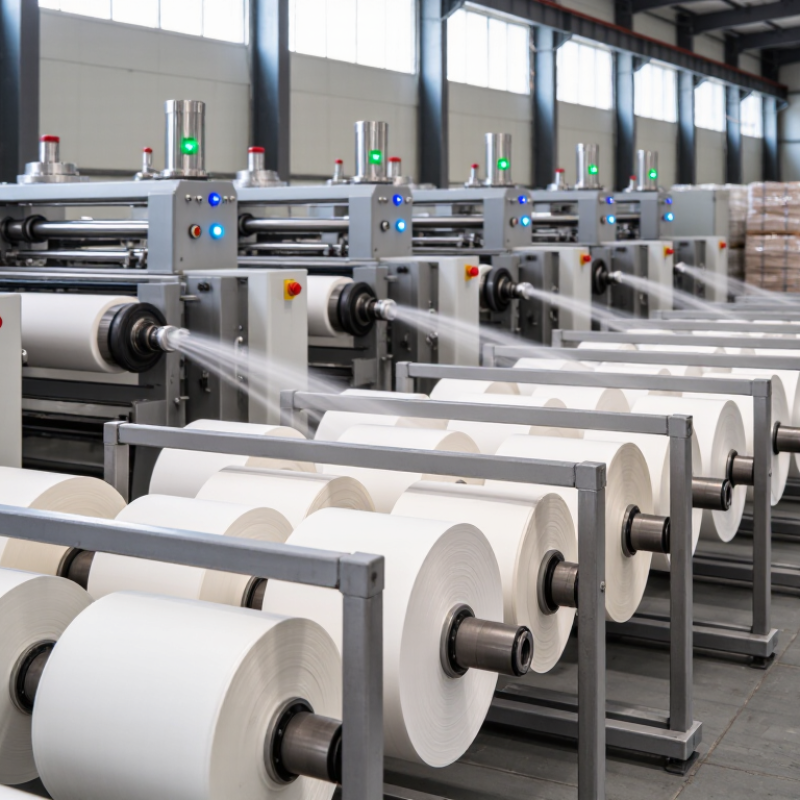
Top 10 Polyester Spunlace Nonwoven Fabric Suppliers?

Polyester Spunlace Nonwoven Fabric: Definition and Key Characteristics

Polyester spunlace nonwoven fabric is a sheet made from polyester fibers bonded by high-pressure water jets. It uses no conventional weaving or knitting. The process creates a soft, flexible structure with useful tensile strength. It also supports uniform surfaces and controlled thickness.

Its key characteristics include low lint, fast drying, chemical resistance, and dimensional stability. Polyester fibers usually provide better durability than many natural fibers. The material can be engineered for filtration, cleaning wipes, medical covers, and industrial liners. According to Grand View Research, the global nonwoven fabrics market was valued at about USD 53.5 billion in 2022, with continued growth expected through 2030. Spunlace remains important because manufacturers can adjust fiber weight, absorbency, and embossing for specific applications.

Performance depends on more than fiber type. A practical inspection should check basis weight, thickness, wet strength, elongation, and surface uniformity. In production trials, uneven water pressure may leave weak zones or visible streaks. That detail is easy to miss. Smithers’ industry research also identifies hygiene, healthcare, and filtration as major demand areas for advanced nonwovens. However, “soft” does not always mean comfortable after repeated wetting. Some grades lose strength when saturated, while others feel too stiff after finishing. Supplier comparisons should therefore include test methods, batch consistency, and traceable technical data. Market figures offer direction, not a substitute for hands-on testing.

How to Evaluate Polyester Spunlace Nonwoven Fabric Suppliers

Choosing among the top 10 polyester spunlace nonwoven fabric suppliers requires more than comparing price lists. Begin with technical consistency. Request the basis weight, fabric width, fiber specification, tensile strength, elongation, and absorbency data. Samples matter. Ask for at least three production lots, not only a showroom sample.

A reliable supplier should explain its web-forming, hydroentangling, drying, and winding controls in clear language. Visit the production site when possible. Check whether operators record line speed, moisture levels, and defect rates. Review test reports from independent laboratories, especially for applications involving wipes, filtration, or medical packaging. Confirm batch traceability from incoming fiber to finished rolls. Document everything.

Commercial details reveal operational strength. Compare minimum order quantities, lead times, roll lengths, packaging methods, and replacement procedures. A low quotation may hide uneven edges, variable GSM, or excessive splice points. Request a written tolerance range. Then test the fabric under real converting conditions, including cutting, folding, printing, and wet handling. Not just price.

Be careful with polished presentations. A supplier may provide excellent samples but struggle during peak-season production. Ask for recent delivery records and references from comparable applications. One evaluation mistake is trusting certificates without checking their scope and expiration date. Another is ignoring communication speed after the first inquiry. Suppliers are not perfect; neither is every inspection plan. Reassess your criteria after pilot production, and record what failed, not only what passed.

Top 10 Polyester Spunlace Nonwoven Fabric Suppliers

How to evaluate polyester spunlace nonwoven fabric suppliers with a 100-point procurement scorecard

Apply these weights when comparing shortlisted suppliers. Verify basis weight with ISO 9073-1, tensile properties with ISO 9073-3, liquid absorbency with ISO 9073-6, and lint and other performance requirements using the applicable customer or industry specifications. The weighting is a practical buyer evaluation model rather than a ranking of any specific company.

Top 10 Polyester Spunlace Nonwoven Fabric Suppliers

Top 10 Polyester Spunlace Nonwoven Fabric Suppliers

The top 10 polyester spunlace nonwoven fabric suppliers should be judged by measurable performance, not attractive catalogs. Experienced buyers check fiber composition, basis weight, width tolerance, tensile strength, and liquid absorption. A reliable supplier can provide recent test reports and production samples before contract approval. Look closely at the fabric surface. It should feel even, without hard knots, loose fibers, or visible streaks. Common applications include wipes, filtration layers, medical covers, and hygiene products. Each use needs a different balance of softness, strength, and cleanliness.

Tips: Request samples in several basis weights, such as 40, 60, and 80 gsm. Test them after storage, folding, and wet handling. Ask about polyester fiber length, hydroentanglement pressure, roll diameter, packaging, and lead time. Confirm whether production records can trace each batch. Small details matter.

A professional supplier should explain quality controls clearly, including moisture checks, roll inspection, and laboratory testing. Certifications may support credibility, but they do not replace physical evaluation. Compare minimum order quantities with your actual demand. Low prices can hide uneven weight or unstable delivery. I have seen specifications look excellent on paper, yet the finished roll handled poorly during converting. That possibility deserves attention. Communication also matters. Delayed answers may signal future problems with claims, revisions, or urgent orders. Choose suppliers that provide practical evidence, consistent samples, and realistic production promises.

Supplier Comparison by Products, Quality, and Production Capacity

Top 10 Polyester Spunlace Nonwoven Fabric Suppliers?

A reliable top-ten shortlist should compare products, quality, and production capacity rather than marketing claims. Suppliers may offer medical wipes, cosmetic pads, filtration media, cleaning cloths, and industrial composites. Check polyester fiber length, basis weight, fabric width, embossing options, and hydrophilic or hydrophobic treatment. These details directly affect softness, absorbency, strength, and converting performance.

Quality requires measurable evidence. Request recent test reports for tensile strength, elongation, lint release, absorbency time, and microbial control where relevant. During factory visits, inspect carding lines, water-jet pressure controls, drying systems, and roll inspection stations. A stable supplier records results by lot. Good documentation matters. However, one sample roll can hide variation. Test several batches under your actual production conditions.

Capacity comparisons should include line width, monthly output, warehouse stock, and realistic lead times. A supplier with multiple spunlace lines may support urgent orders, but utilization rates can limit flexibility. Ask whether capacity is reserved for contract customers. Confirm export packing, pallet strength, core size, and moisture protection before shipment. Public figures may be optimistic. I would verify them through production records, trial orders, and delivery history. Pricing alone is a weak filter; a cheaper roll can create higher waste, slower converting, and costly rework.

Top 10 Polyester Spunlace Nonwoven Fabric Suppliers? - Supplier Comparison by Products, Quality, and Production Capacity

Supplier Profile Primary Production Region Main Product Range Typical Fiber Options GSM Range Maximum Web Width Quality Credentials Commonly Offered Estimated Capacity
(Metric Tons/Month)
Typical Applications Typical Lead Time
Supplier Profile 01 East Asia Standard and hydrophilic polyester spunlace rolls Virgin PET; hollow PET; recycled PET 30–120 3.2 m ISO 9001; batch basis weight and tensile testing; optional recycled-content documentation 1,500–3,000 Wipes, filtration media, medical disposables, interlinings 20–35 days
Supplier Profile 02 South Asia Economical polyester and polyester-viscose spunlace Polyester; polyester-viscose blends; bamboo blends 35–100 2.8 m ISO 9001; internal absorbency, lint, and strength inspection; product safety declarations on request 800–1,800 Household wipes, personal-care wipes, shoe and garment components 25–45 days
Supplier Profile 03 Southeast Asia Soft-touch, low-lint, and embossed spunlace materials Virgin PET; recycled PET; PET-cellulose blends 40–110 3.0 m ISO 9001; OEKO-TEX-type restricted-substance testing available; controlled roll inspection 1,000–2,200 Cosmetic pads, wet wipes, premium cleaning cloths, packaging liners 25–40 days
Supplier Profile 04 Western Europe Technical and medical-grade spunlace nonwovens Virgin PET; bicomponent PET; PET-viscose blends 45–150 3.5 m ISO 9001; ISO 13485 capability for applicable medical operations; documented traceability and validation procedures 2,000–5,000 Medical gowns, sterilization wraps, filtration, automotive and construction products 30–60 days
Supplier Profile 05 North America Industrial, filtration, and engineered spunlace fabrics Virgin PET; high-tenacity PET; recycled PET 50–200 3.6 m ISO 9001; ASTM-based physical testing; lot traceability; customer-specific technical data sheets 1,200–3,500 Air and liquid filtration, composites, insulation, industrial wiping 30–55 days
Supplier Profile 06 East Asia High-volume commodity spunlace and converted rolls Virgin PET; recycled PET; polyester-cellulose blends 25–90 3.2 m ISO 9001; online basis-weight monitoring; standard color and roll-defect inspection 3,000–8,000 Mass-market wipes, disposable towels, hygiene products, retail cleaning cloths 18–30 days
Supplier Profile 07 Southern Europe Premium textile-like and embossed spunlace fabrics Virgin PET; recycled PET; PET-viscose blends 40–130 3.1 m ISO 9001; restricted-substance controls; color fastness, tensile, and abrasion testing 900–2,500 Home textiles, premium wipes, table coverings, apparel and footwear components 35–60 days
Supplier Profile 08 East Asia Recycled-content and sustainable spunlace materials GRS-eligible recycled PET; virgin PET; recycled-cellulose blends 35–100 3.0 m ISO 9001; recycled-content chain-of-custody documentation; chemical-management testing available 1,000–2,800 Eco-conscious wipes, shopping bags, packaging, household and personal-care products 25–45 days
Supplier Profile 09 Middle East and North Africa Regional supply of general-purpose and hygiene spunlace Virgin PET; polyester-viscose blends; recycled PET where available 30–90 2.6 m ISO 9001 or equivalent quality systems; incoming-fiber inspection; finished-roll testing 600–1,500 Wipes, hygiene products, furniture backing, construction and agriculture covers 25–50 days
Supplier Profile 10 Eastern Europe Short-lead-time technical and converted spunlace products Virgin PET; recycled PET; PET-polypropylene blends 40–160 3.2 m ISO 9001; customer-specific testing; traceability and conformity documentation for industrial applications 1,000–2,400 Automotive interiors, filtration, protective products, medical and industrial wipes 20–45 days

Note: Capacity, lead-time, width, and GSM figures are representative public-market ranges for anonymized supplier profiles. Actual specifications, certifications, minimum order quantities, and available production capacity should be verified directly through current technical documents and factory audits.

How to Choose the Right Polyester Spunlace Fabric Supplier

Choosing the right polyester spunlace nonwoven fabric supplier requires more than comparing prices. Smithers’ “The Future of Global Nonwovens to 2028” reports continued growth in nonwoven demand, driven by hygiene, medical, filtration, and industrial applications. This growth increases supplier choices, but quality can vary between production lots. Ask for fiber specifications, fabric weight tolerance, tensile strength, elongation, absorbency, and surface uniformity. A reliable supplier should provide traceable test reports from qualified laboratories.

Production experience matters. Request samples from different batches, not only one carefully selected roll. Check whether the fabric sheds fibers during cutting, keeps its structure after wetting, and remains stable after packaging. For medical or personal-care applications, review the supplier’s quality system, factory audit records, and material declarations. ISO 9001 certification can support process control, but certification alone does not guarantee suitable fabric performance. I have seen attractive samples fail during high-speed converting. That detail is easy to overlook.

Tips: Compare total cost, not only the unit price. Include minimum order quantity, lead time, testing fees, packaging, and rejected-roll risk. Confirm whether polyester origin, recycled content, color, and finishing agents can be changed without notice. The Global Nonwovens Business Information report indicates that sustainability and recycled feedstocks are gaining importance across nonwoven markets. Ask for evidence, not promises. A practical trial order is often wiser than a large commitment. Supplier communication should also be tested: slow answers before purchase may become serious delays after purchase.

FAQS

What is polyester spunlace nonwoven fabric?

It is a sheet made from polyester fibers bonded with high-pressure water jets. No weaving is used. The fabric is soft, flexible, and reasonably strong.

What are its main characteristics?

Common characteristics include low lint, quick drying, chemical resistance, and dimensional stability. It can also provide a uniform surface and controlled thickness. Performance still varies by grade.

Where is this fabric commonly used?

Typical applications include filtration, cleaning wipes, medical covers, and industrial liners. Manufacturers can adjust fiber weight, absorbency, and embossing. The intended use matters.

Which properties should buyers inspect?

Check basis weight, thickness, wet strength, elongation, and surface uniformity. Also inspect absorbency and fiber shedding during cutting. Small differences can affect converting results.

How many samples should a supplier provide?

Request samples from at least three production lots. One showroom roll may look excellent but hide batch variation. More evidence helps.

How can production quality be evaluated?

Ask about web forming, water-jet bonding, drying, and winding controls. Review line-speed records, moisture records, and defect rates when available. Uneven water pressure can create weak zones or streaks.

Is a low unit price always the best choice?

No. Compare total cost, including testing, packaging, lead time, and rejected-roll risk. Low prices may hide uneven edges, changing GSM, or many splice points. Price can mislead.

What should buyers test before placing a large order?

Run a practical trial involving cutting, folding, printing, wet handling, and packaging. Check whether the fabric keeps its structure after saturation. I have seen attractive samples fail during high-speed converting.

Do certificates guarantee suitable fabric performance?

No. A certificate supports process control, but it does not prove application suitability. Check its scope, expiration date, and testing organization. Then conduct your own trial.

What sustainability details should buyers confirm?

Ask whether polyester origin, recycled content, colors, or finishing agents may change. Request supporting documents instead of accepting general promises. A written declaration is better, though not perfect.

Conclusion

This article provides a practical guide to polyester spunlace nonwoven fabric, explaining its structure, manufacturing process, softness, strength, absorbency, breathability, and suitability for applications such as hygiene products, medical supplies, cleaning materials, and industrial uses. It also outlines the main factors to consider when evaluating a Polyester Spunlace Nonwoven Fabric Supplier, including raw material quality, fiber composition, fabric weight, uniformity, production technology, customization options, quality control systems, certifications, delivery reliability, and after-sales service.

A comparison of the top 10 suppliers focuses on their product ranges, quality consistency, manufacturing capacity, technical support, and ability to meet different order requirements. The article concludes with practical advice for selecting the right supplier by matching performance expectations, required specifications, budget, production volume, lead time, and long-term cooperation goals. This approach helps buyers make informed decisions and establish a stable supply chain for high-quality polyester spunlace nonwoven fabrics.

Aria

Aria

Aria is a dedicated marketing professional with a deep passion for innovative strategies and a keen understanding of our company's product offerings. With a wealth of experience in the industry, Aria excels at crafting engaging content that highlights the unique features and benefits of our......